
How Air-Injection Aerification Improves Turf Health


Maintaining consistent golf course turf health starts below the surface. Compacted soils restrict airflow, water movement, and root development, creating stress that can impact playability and recovery. That is why many superintendents are turning to air-injection aerification machines as part of a long-term turfgrass maintenance strategy.
Unlike traditional core aeration, air-injection systems use high-pressure air to fracture compacted soil beneath the surface with minimal disruption to play. The Air2G2 system, for example, injects pressurized air directly into the rootzone to improve soil structure, water infiltration, and root development while avoiding the cleanup associated with core removal.
Why Rootzone Oxygenation Matters
Healthy turf requires oxygen movement through the soil profile. When compaction increases from traffic, mowing, or environmental conditions, pore space decreases and roots struggle to access oxygen, nutrients, and water efficiently.
Air-injection aerification helps improve rootzone oxygenation by creating underground fractures and channels that increase air exchange and improve infiltration. Research referenced in Air2G2 materials showed improved root biomass, better water movement, and reduced surface hardness compared to untreated areas.
For golf course superintendents, this can support:
Improved rooting depth
Better moisture management
Reduced stress during heat periods
Faster recovery in high-traffic areas
Improved overall turf density and consistency
Best Practices for Air-Injection Aerification
To maximize results from soil aeration programs, timing and setup matter.
Timing
Many turf managers schedule applications during active growth periods to encourage recovery and root development. Moderate traffic areas may benefit from monthly treatments, while heavily used greens or approaches may require more frequent applications depending on compaction levels and soil conditions.
Depth Selection
Air-injection aerification machines typically allow operators to adjust aeration depth and spacing. Shallower depths can target surface firmness issues, while deeper settings help relieve subsurface compaction and improve deeper root growth. The Air2G2 system includes adjustable depth settings with 8-inch and 12-inch probe options.
Follow-Up Practices
Post-treatment programs often include:
Light irrigation to help move oxygen and moisture through the profile
Nutrient applications timed with improved infiltration
Monitoring moisture retention and firmness
Continued traffic management to reduce recurring compaction
Because air-injection systems create minimal surface disruption, courses can often return areas to play quickly with little cleanup or downtime.
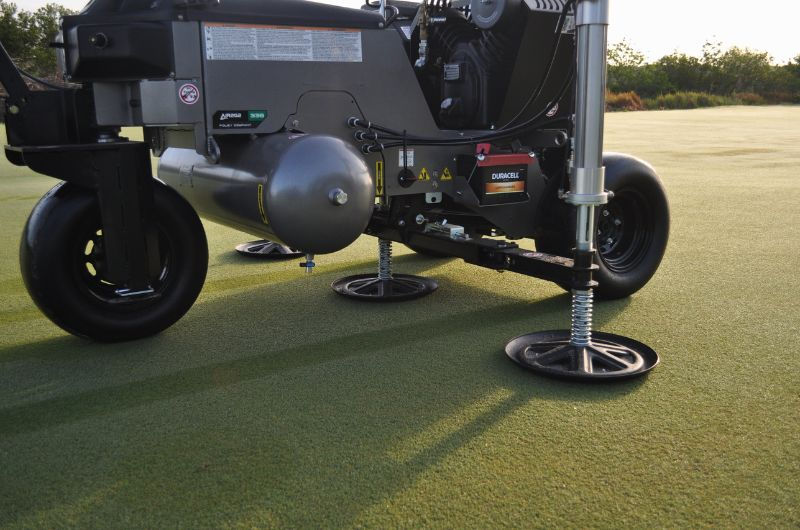
A Modern Approach to Compaction Relief
As expectations for playability continue to rise, non-disruptive aerification methods are becoming a larger part of comprehensive turfgrass maintenance programs. Air-injection aerification machines provide golf course managers with a way to address compaction relief and improve soil conditions without significantly affecting daily operations.
For facilities focused on long-term golf course turf health, improving rootzone oxygenation beneath the surface may be one of the most effective steps toward stronger, more resilient turf.


Comments